
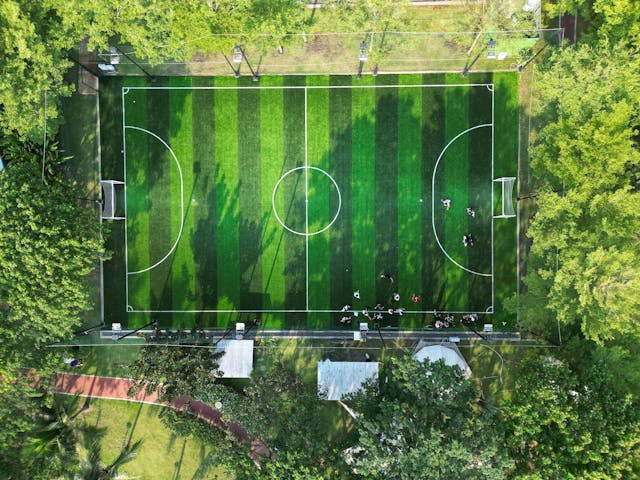
Maintaining safe, playable grounds is a duty that clubs, municipalities, and facility management take seriously since Australian sporting culture is ingrained in daily life. The drainage system is one of the most neglected yet crucial elements of any athletic arena. After even mild rainfall, fields without adequate drainage become flooded, dangerous, and unusable, aggravating administrators, coaches, and players alike.
Playability is not the only effect of poor drainage. Additionally, it causes surface erosion, turf degeneration, and the long-term deterioration of the earth beneath the field. It is far more cost-effective to invest in appropriate drainage infrastructure from the start rather than continuously fixing harm brought on by poor water management.
Comprehending Drainage Systems for Sports Fields
Surface grading, underground drainage pipes and suitable growth soil or synthetic infill that facilitates water flow are all necessary for effective sports field drainage. In order to maintain healthy roots and base layers, the objective is to swiftly remove extra water from the playing surface while simultaneously controlling the water table beneath the field.
Usually, slotted or perforated pipes are positioned beneath the field surface in a lateral or herringbone pattern for subsurface drainage. These pipelines gather water and divert it to stormwater systems or collection locations. A well-drained sports pitch may recover from heavy rain in a matter of hours rather than days if it is properly planned and built.
Selecting the Appropriate Strategy for Australian Situations
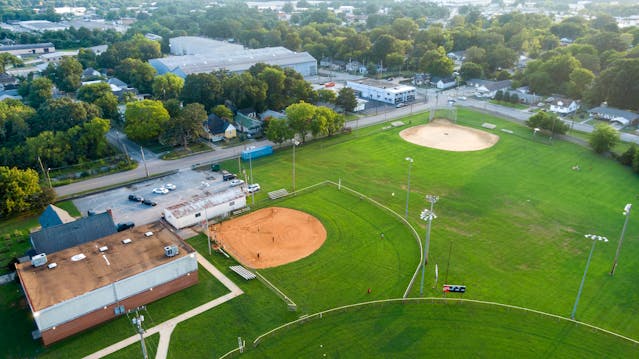
The ideal drainage system is mostly dependent on local rainfall patterns, soil types, and the particular sport being played, as Australia’s climate differs greatly from region to region. While fields in Victoria deal with continuous winter rains, those in Queensland may experience severe summer storm events. The drainage system must be built to withstand peak loads without malfunctioning in either scenario.
Due in part to its superior drainage capabilities over natural grass in high-use settings, synthetic turf fields have grown in popularity throughout Australia. But for synthetic surfaces to work properly, adequate subsurface drainage is necessary. Natural turf fields, particularly those used for cricket and football codes, require precisely designed systems that preserve surface hardness while permitting water to flow freely.
Long-Term Drainage System Maintenance
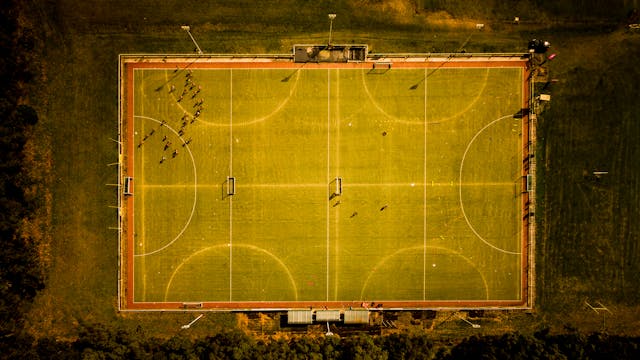
To function at their peak, even the most well-designed drainage systems need regular maintenance. Debris can clog drain inlets, silt can build up in pipes over time, and surface compaction from frequent use can drastically lower penetration rates. Drainage infrastructure is regularly inspected and cleaned to maintain the system’s intended functionality. To find any problems before they become major ones, facility managers should plan regular assessments, especially during periods of high usage. By reducing compaction and improving water penetration, aeration of natural turf fields also aids in maintaining drainage capacity. In addition to keeping players safe and surfaces playable all year round, a proactive approach to drainage management safeguards the facility’s investment.